
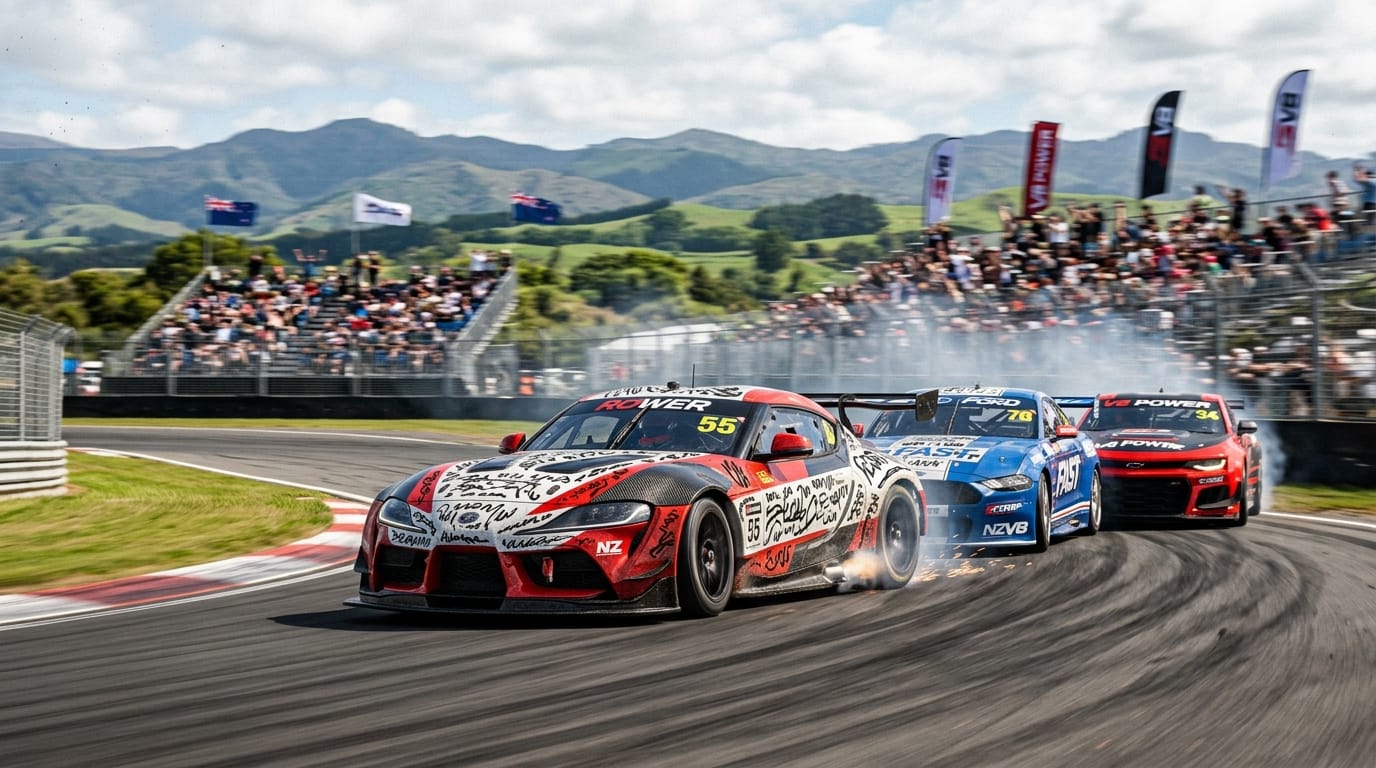
Toyota has changed the look and sound of Supercars in 2026. For the first time, the Toyota GR Supra is racing against the Ford Mustang and Chevrolet Camaro in Australia and New Zealand’s leading touring-car championship.
For Kiwi fans, the timing could hardly be better. The championship returned to New Zealand with events at Taupō and Christchurch, while New Zealand driver Ryan Wood became one of the key faces of Toyota’s new programme.
The result was immediate excitement. Wood gave Toyota its first Supercars pole position and first race victory at Taupō. One week later, the new GR Supra was fighting at the front again at Ruapuna Raceway in Christchurch.
The car also brings an unusual twist to the Supra story. The road-going GR Supra that New Zealand enthusiasts know uses a turbocharged inline-six engine. The Supercars version uses a large V8 developed specifically for Gen3 competition.
That makes the 2026 Supra more than another racing version of a road car. It represents Toyota’s decision to enter one of Australasia’s toughest motorsport categories with a car designed to challenge two established V8 rivals.
If you followed the first Christchurch round, our complete ITM Christchurch Super 440 weekend guide explains how the event fits into the city’s growing performance-car culture.
Why Toyota’s Supercars Entry Matters in New Zealand
For years, Supercars has been strongly associated with the Ford-versus-Holden rivalry. Chevrolet replaced Holden in the Gen3 era, but the basic two-brand battle remained familiar.
Toyota changes that picture.
The GR Supra gives fans a third shape, a third engine programme, and another major manufacturer to support. It also brings the Toyota Gazoo Racing name into a championship where brand loyalty has always mattered.
That is important in New Zealand because Toyota already has a strong motorsport presence here. Kiwi fans know the GR badge through road cars, grassroots competition, driver development, and Toyota’s local racing programmes.
Seeing a Supra line up on a Supercars grid connects those different parts of the performance world.
From Road-Going Supra to a Gen3 V8 Race Car
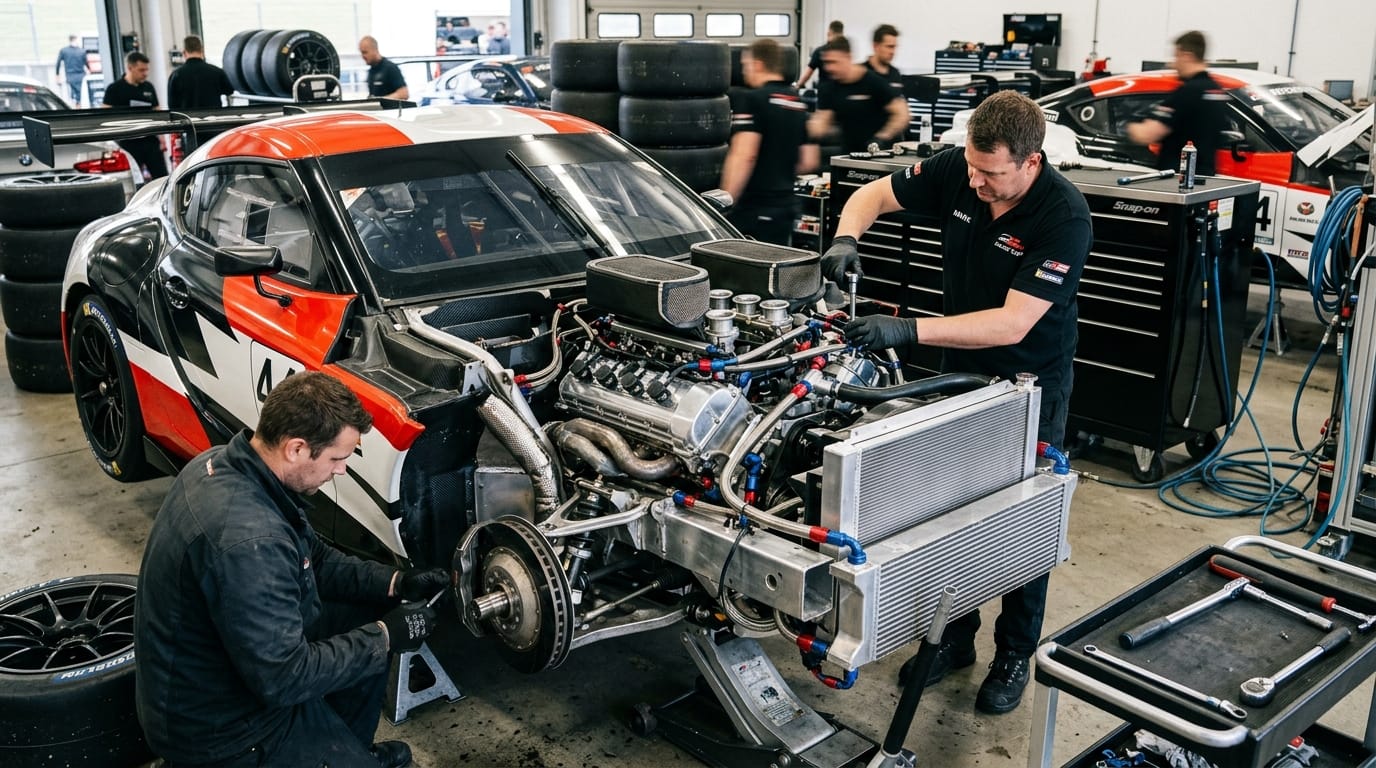
The race car looks like a GR Supra, but it is not simply a modified road vehicle.
Supercars uses its Gen3 technical rules to create closer competition between different manufacturers. The cars share important performance targets while keeping body shapes that resemble the road cars they represent.
The Toyota GR Supra Supercar weighs about 1,350 kilograms and produces roughly 600 horsepower. Supercars lists a top speed of around 300 km/h and a 0–100 km/h time of about 3.4 seconds.
Those numbers place it in the same general performance window as the Ford Mustang and Chevrolet Camaro used in the championship.
The goal is not to give one brand a huge engine advantage. The category works to create parity so racing can be decided by drivers, teams, setup, strategy, and execution.
The 5.2-Litre V8 Makes This Supra Very Different
The biggest surprise sits under the bonnet.
The recent New Zealand road-going GR Supra uses a 3.0-litre turbocharged inline-six engine. The Supercars version instead uses Toyota’s 2UR-GSE V8 architecture in a 5.2-litre racing specification.
The engine has four camshafts, hydraulic variable valve timing, and a purpose-built intake system for Supercars competition.
For fans, that means the racing Supra delivers a very different character from the street car. A road Supra is known for turbocharged six-cylinder performance. The Supercar brings the deep sound and high-speed drama that fans expect from modern V8 touring-car racing.
That difference does not make the race car less authentic. Supercars rules require each manufacturer to build around the category’s technical framework. Toyota chose a V8 because it fits that environment and allows the Supra to compete directly with Ford and Chevrolet.
Toyota’s First Supercars Win Happened in New Zealand
The biggest moment of Toyota’s early season happened at Taupō.
Ryan Wood claimed Toyota’s first Supercars pole before converting it into the manufacturer’s first race victory. It happened in only Toyota’s ninth race in the championship.
For Kiwi fans, that made the result much more memorable. A New Zealand driver delivered the first victory for a new manufacturer at a New Zealand circuit.
The win also proved that the Supra could compete near the front without waiting several seasons for development.
Wood had to manage strategy, tyre performance, and pressure from experienced rivals. The victory was not simply the result of straight-line speed. Team execution and driver performance played major roles.
That fits the wider lesson of Supercars. A fast car gives a team potential, but races are often won through pit stops, tyre management, clean starts, and good decisions.
Ryan Wood Makes the Toyota Story More Relevant to Kiwi Fans
Toyota could have entered Supercars without creating such a strong New Zealand connection. Ryan Wood changed that.
The Wellington-born driver competes for Walkinshaw TWG Racing and has become one of the most visible drivers in the Supra programme.
His Taupō victory gave local supporters a reason to connect with Toyota’s debut immediately. Instead of watching a new manufacturer from a distance, Kiwi fans had one of their own drivers helping write its first chapter.
That momentum carried into Christchurch.
Ruapuna offered a very different challenge from Taupō, yet Wood again showed strong speed in the Toyota. His performances helped make the Supra one of the cars local fans watched closely throughout the weekend.
For anyone who wants to turn race-weekend excitement into something more personal, our guide to motorsport-to-road experiences in Christchurch explains how performance fans can enjoy a premium road drive without treating public roads like a circuit.
Christchurch Pole Position Showed the Supra Had Real Pace
Wood secured another pole position during the Christchurch Super 440. It was his second pole of the season and the second for Toyota’s new Supra.
That mattered because Ruapuna was unfamiliar territory for the championship. Teams had to learn how the Gen3 cars behaved around the circuit while managing tyres, traffic, kerbs, and changing track conditions.
A pole position showed that Toyota’s package could adapt quickly.
Wood also reached the podium during the Christchurch weekend before later suffering a mechanical problem in the finale. Motorsport rarely follows a perfect script, and Toyota’s debut season has included both strong results and difficult reliability moments.
That makes the programme more interesting to follow. The Supra has shown enough speed to win races, but Toyota and its teams still have development work ahead.
What the GR Supra Era Means for Christchurch Car Culture
Toyota’s arrival matters beyond championship standings.
Christchurch now has a direct connection with a major new chapter in Supercars history. Fans at Ruapuna saw the championship’s newest manufacturer compete during its first season, while a Kiwi driver put the car on pole.
That adds another layer to the city’s growing motorsport identity.
Christchurch already has a strong enthusiast community. The Supercars weekend gives that audience a national and international focal point. New manufacturers create new merchandise, new rivalries, new driver loyalties, and new conversations about performance cars.
The Supra is particularly useful for that connection because it has a strong road-car identity. Many enthusiasts knew the Supra long before Toyota announced its Supercars programme.
A Third Manufacturer Makes Supercars More Interesting
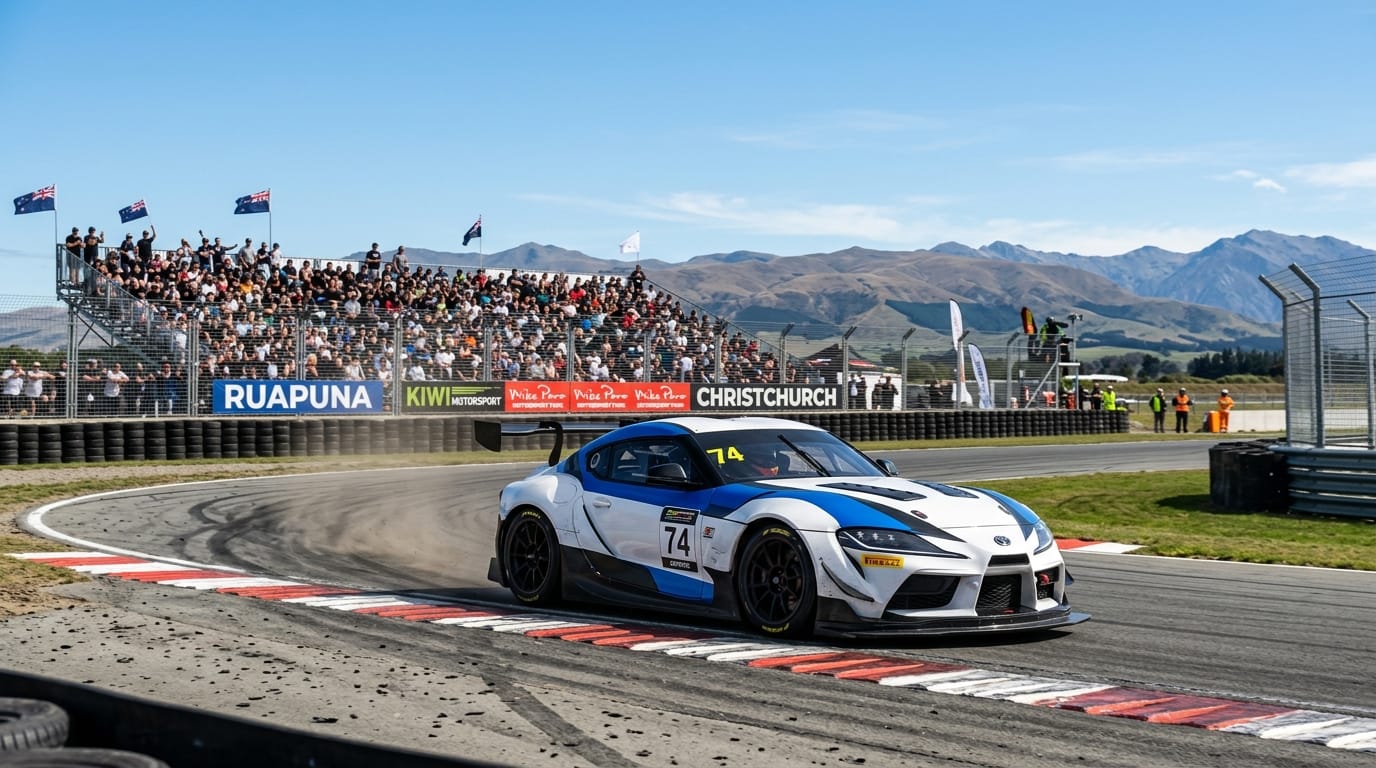
More manufacturers give fans more reasons to care about individual battles.
A Ford supporter may watch the Mustangs. Chevrolet fans have the Camaros. Toyota now gives another large group of enthusiasts a car to follow.
That also changes what people see in the paddock and on track. Different body shapes make the field more visually interesting, while different engine programmes give each manufacturer its own technical story.
The competition can also attract people who did not previously follow Supercars closely. Someone who owns a GR model or has followed Supra history may now have a reason to watch.
This connection between road cars and motorsport is one reason performance events can help grow luxury driving tourism. Fans often leave the circuit wanting to experience a special car for themselves.
A responsible scenic drive gives them a different type of performance experience. The focus moves from racing to design, sound, steering feel, scenery, and the sense of occasion that comes with driving a premium car.
Our Christchurch to Akaroa supercar day-trip guide is one way to extend a motorsport visit into a wider Canterbury experience.
The Road Supra Is Leaving New Zealand, but Its Racing Story Continues
There is an interesting contrast for New Zealand Supra fans in 2026.
Toyota New Zealand announced that the current-generation GR Supra would be discontinued locally after its final Track Edition models. The A90 road car had been sold in New Zealand since 2019.
Yet just as that road-car chapter closes, the Supra name has become more visible in motorsport.
Toyota itself pointed to racing as part of the model’s continuing legacy. The Supra now competes in Supercars with V8 power, while GT4 versions also keep the name active on circuits.
That makes 2026 an unusual moment for the model. Kiwi buyers may no longer be able to walk into a showroom and order a new current-generation Supra once remaining cars are gone, but fans can watch an even more dramatic version battle Mustangs and Camaros on track.
For official technical information, visit the Supercars Gen3 car guide, which lists the specifications of the Toyota GR Supra, Ford Mustang, and Chevrolet Camaro.
Toyota’s first Supercars season has already produced history. The Supra earned a race win in New Zealand, a Kiwi driver delivered that breakthrough, and Christchurch fans saw the car compete at Ruapuna during its debut year.
The next question is how far Toyota can take the programme.
Early speed shows that the platform has potential. Mechanical setbacks show that development still matters. That combination should keep the Toyota story interesting through the rest of 2026 and beyond.
For Christchurch performance fans, the bigger impact is simple. Supercars no longer feels like only a Ford-versus-Chevrolet fight. Toyota has arrived, the Supra has already won, and New Zealand has been part of the story from the beginning.