
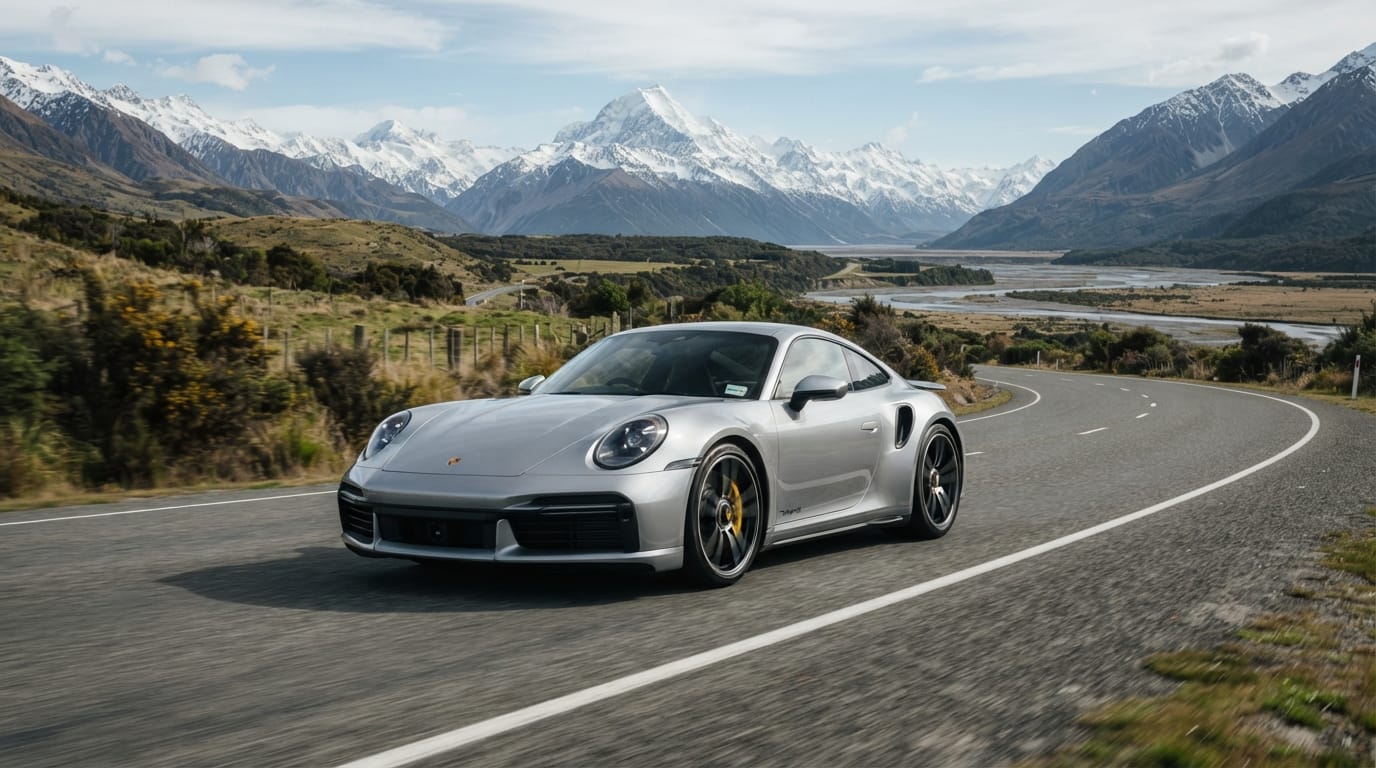
The Porsche 911 Turbo S has always occupied an unusual place in the performance-car world. It can accelerate like an exotic, cover long distances like a grand tourer, and remain usable enough for regular driving. In 2026, that formula has moved into a new phase with T-Hybrid technology.
The latest 911 Turbo S produces 711 PS, or about 701 hp, from a 3.6-litre flat-six supported by an electrified system. Porsche says it is the most powerful production 911 to date. It can accelerate from 0 to 100 km/h in 2.5 seconds and reach 320 km/h, yet the headline numbers are only part of the story. The more interesting development is how Porsche is using electrification to improve response rather than turn the 911 into a conventional plug-in hybrid or full EV.
That makes the car highly relevant to the wider shift already explored in our guide to hybrid supercars in New Zealand. Performance brands are discovering that electric assistance can sharpen an engine-powered car instead of replacing what enthusiasts enjoy about it. For specifications, see Porsche’s official 911 Turbo S overview.
Why Porsche’s T-Hybrid System Matters More Than the Power Figure
A 701-hp Porsche is naturally going to attract attention, but focusing only on peak output misses the clever part of the engineering. The new Turbo S uses a 400-volt T-Hybrid architecture with two electric exhaust-gas turbochargers, a compact high-voltage battery, and an electric motor integrated into the eight-speed PDK transmission.
The basic idea is to use electricity where it gives the greatest performance benefit. Traditional turbochargers rely on exhaust flow to build boost. That can create a delay between pressing the accelerator and receiving full response. Electrically assisted turbochargers can react much faster, helping the engine deliver torque sooner and more consistently.
For a road car, that can matter more than another impressive number on a specification sheet. Instant response makes a car feel alert at realistic speeds. It can improve overtaking, corner exits, and the sense of connection between the driver’s right foot and the engine.
Electrification Without Turning the 911 Into a Full EV
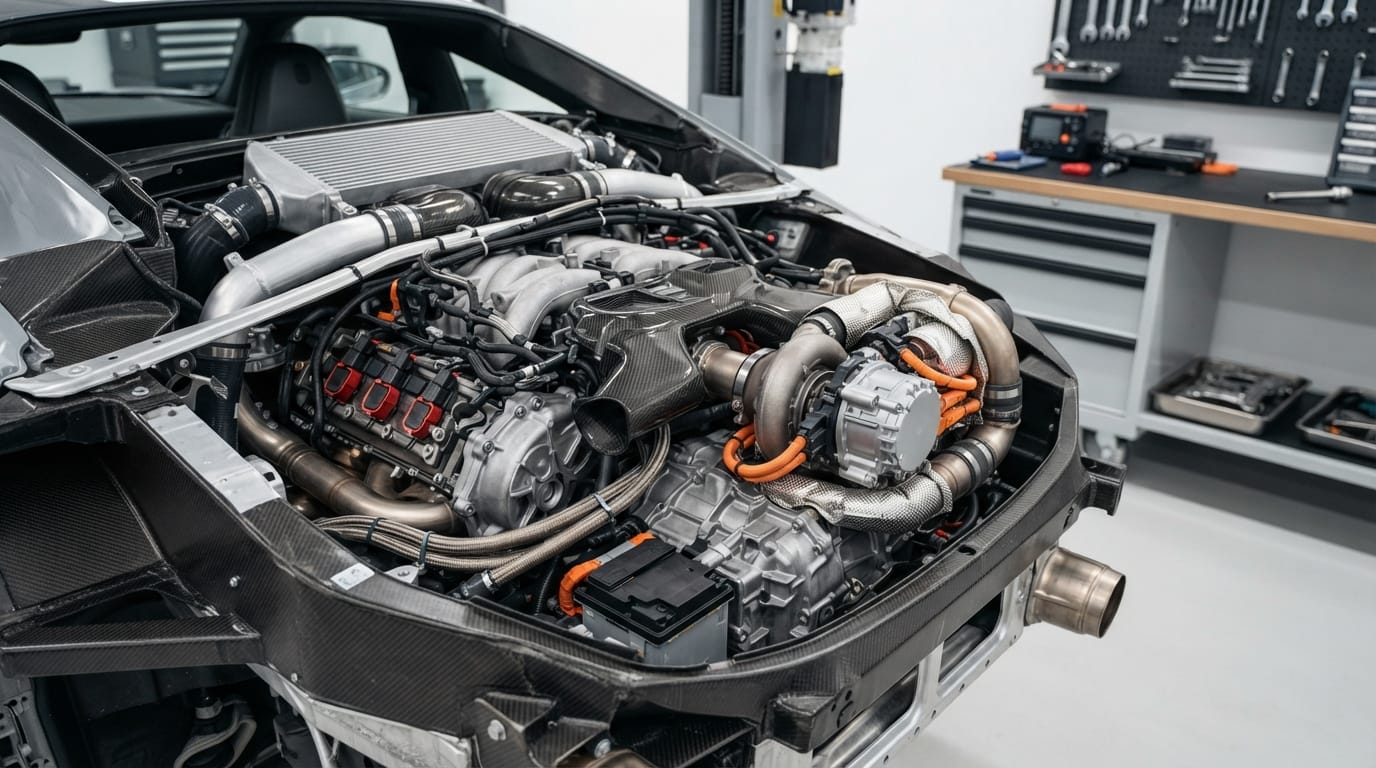
Porsche has taken a deliberately focused approach. The Turbo S is not trying to travel meaningful distances on battery power alone. Instead, the electrical system supports the combustion engine and helps the turbocharging system work more effectively.
The high-voltage battery has a capacity of 1.9 kWh, which is tiny compared with the battery in a full electric vehicle. That keeps the system compact while still providing enough energy for the electric components that contribute to performance. The integrated motor in the PDK can also add power to the drivetrain.
This creates a different type of hybrid experience. The technology is there to make the car more responsive and capable, not to make the driver think they are operating an electric commuter vehicle.
Twin eTurbos Change How Boost Is Delivered
The Turbo S uses two electrically assisted turbochargers. Porsche calls them eTurbos. Because an electric motor can accelerate the turbocharger independently of exhaust pressure, the system can build boost quickly and reduce the waiting time associated with traditional turbocharging.
That should make the engine feel more immediate across a wider range of speeds. On a public road, this kind of responsiveness can be more noticeable than a small increase in top speed because the driver experiences it every time they squeeze the accelerator.
A Small Battery Can Still Play a Big Performance Role
The 1.9-kWh battery shows that electrification does not always mean adding a huge battery pack. In a performance hybrid, the goal can be targeted energy use. The battery supports the eTurbos and drivetrain motor while keeping the package relatively compact.
That matters because weight is critical in any high-performance car. Every new system adds mass, so engineers have to make sure the performance benefit is worth the additional hardware. Porsche’s solution is designed around that compromise.
Why the Fastest Production 911 Is Still Designed for Everyday Use
The Turbo S has never been a stripped-out track special. It is meant to combine extreme performance with comfort, traction, and confidence. The latest model continues that philosophy with all-wheel drive, an eight-speed PDK, sophisticated chassis systems, and a cabin built for more than short bursts of excitement.
That everyday usability is what separates the Turbo S from many traditional supercars. A driver can enjoy enormous acceleration without needing to accept the compromises of a low-volume track-focused machine. It is one reason the 911 Turbo has remained popular with buyers who want one car to cover several roles.
2.5 Seconds to 100 km/h Is Impressive, but Control Matters More
Porsche’s official 0–100 km/h figure of 2.5 seconds is extraordinary, but that level of acceleration also shows why first-time drivers need respect for modern performance cars. The speed builds far faster than it does in an ordinary vehicle, and the gap between a small throttle input and full acceleration can be dramatic.
Our guide to why supercars handle differently from everyday cars explains how tyres, brakes, weight distribution, steering, and throttle response change the driving experience. Modern electronics help, but they do not remove the need for smooth inputs and sensible decisions.
What the 911 Turbo S T-Hybrid Means for Christchurch Supercar Fans
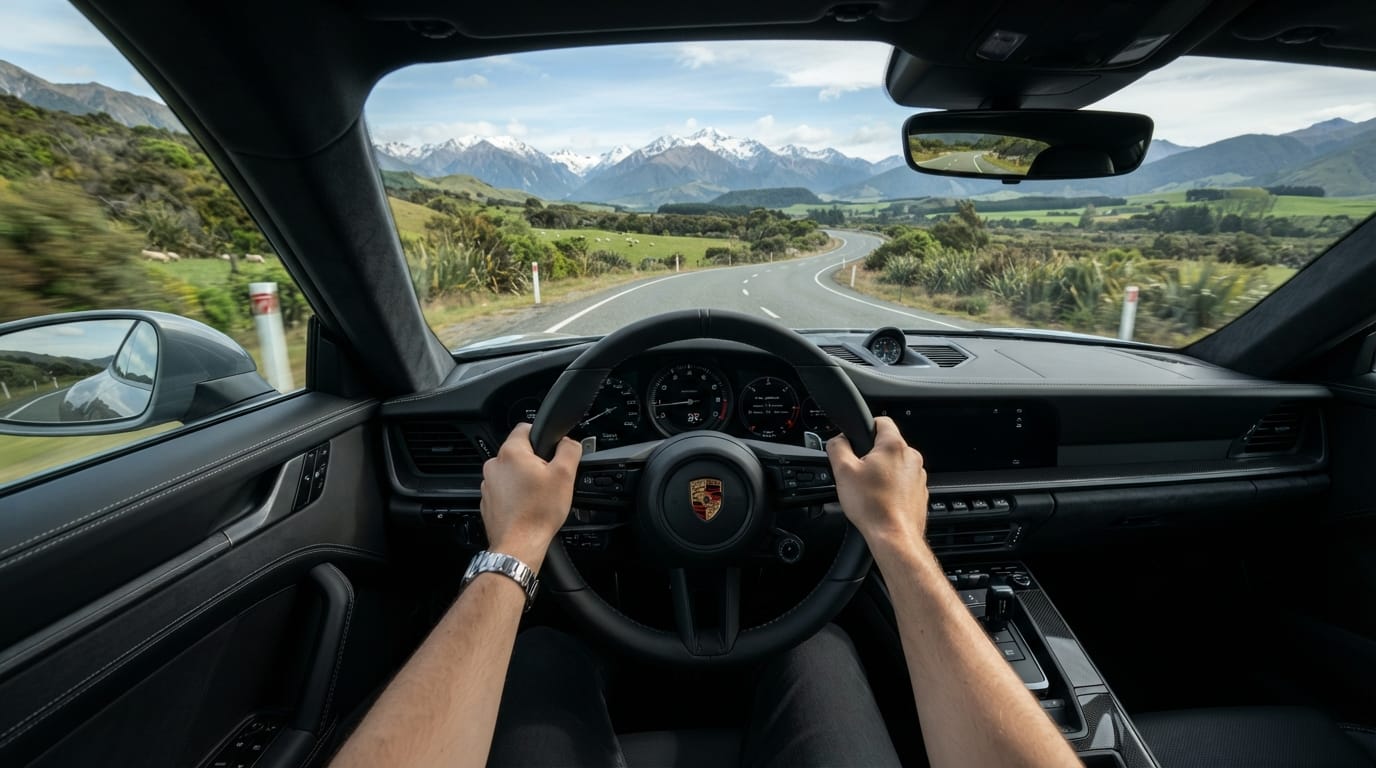
For Christchurch enthusiasts, the new Turbo S is a useful example of where high-performance road cars are heading. It combines old-school ingredients—a flat-six engine, recognizable 911 shape, and driver-focused chassis—with technology that would have sounded futuristic not long ago.
That mix suits the way many people actually enjoy a performance car in New Zealand. The appeal is not simply reaching an extreme top speed. It is having immediate response on a flowing road, strong brakes when the route tightens, traction when conditions change, and enough comfort to enjoy the journey rather than endure it.
Canterbury roads also highlight why usable performance matters. Scenic routes can move quickly from open straights to tighter corners, changing surfaces, elevation, and unpredictable weather. A car that feels stable and communicative can be more rewarding than one designed only to produce a spectacular number in ideal conditions.
Hybrid Technology Does Not Have to Make a Car Feel Clinical
Some enthusiasts still associate electrification with silence, extra weight, and reduced character. The 911 Turbo S shows another approach. Porsche has kept the combustion engine at the centre of the experience while using electrical technology to improve the way that engine responds.
That same pattern is appearing across the supercar world. Lamborghini uses electric motors to support a naturally aspirated V12 in the Revuelto. McLaren has used hybrid assistance in models such as the Artura and W1. Ferrari has also shown that electrified systems can add speed while preserving a strong performance identity.
The result is not one single future for the supercar. It is several different solutions competing to deliver the same feeling: a car that reacts instantly and makes the driver feel involved.
Scenic Roads Reward Balance, Not Maximum Speed
A supercar can be enjoyable without approaching its performance limits. On a scenic Christchurch or Canterbury drive, the experience comes from steering response, braking feel, engine character, the seating position, the view ahead, and the way the car changes direction. Those qualities are available well below the legal speed limit.
Drivers comparing different experiences can read our guide to top supercars you can drive in Christchurch and where to take them. A Porsche, Ferrari, Lamborghini, or McLaren can all feel special, but each creates a different kind of memory.
The 2026 Porsche 911 Turbo S T-Hybrid is important because it shows that the everyday supercar is becoming more sophisticated without abandoning performance. Its 701 hp and 2.5-second sprint will dominate the headlines, yet the more meaningful story is the way Porsche is integrating electrification into a familiar driving formula.
For Christchurch supercar fans, that is a sign of what comes next. The fastest cars are no longer evolving through engine power alone. Electric motors, smart turbocharging, active chassis systems, and advanced traction are becoming part of the experience. The technology is changing rapidly, but the reason people love these cars remains simple: the right machine can turn an ordinary road into a journey worth remembering.