
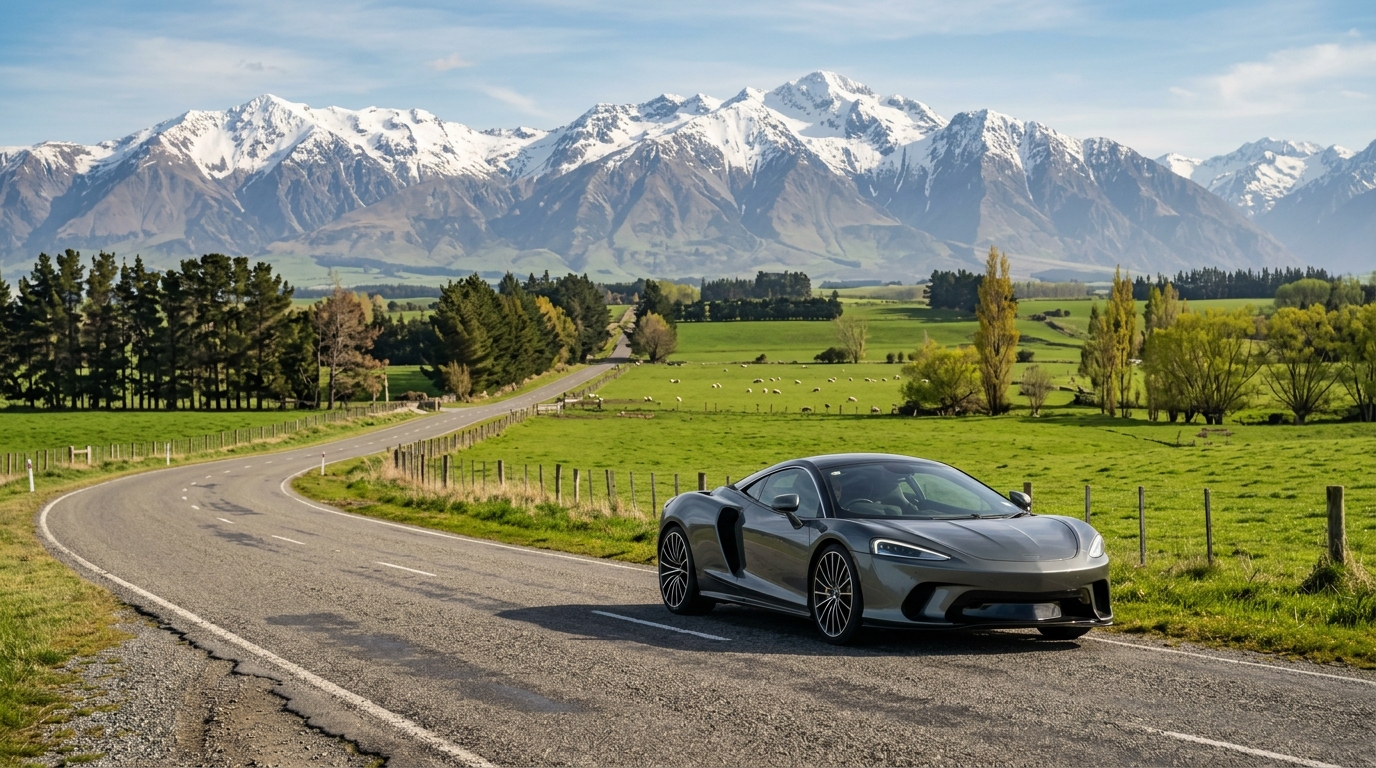
Canterbury supercar spring driving in 2026 offers a memorable combination of performance cars, changing landscapes, and the excitement of exploring New Zealand’s South Island. Spring brings longer days, green countryside, mountain scenery, and opportunities for a carefully planned luxury road experience.
However, the season also brings unpredictable conditions. Rain, strong winds, cold mornings, and occasional snow around elevated routes can change the driving environment quickly.
For a low, high-performance sports car, these conditions deserve special attention. Wide tires, firm suspension, responsive acceleration, and limited ground clearance can make route selection especially important.
This guide explains how to prepare for spring driving, recognize potential hazards, and create a comfortable Canterbury outing without unnecessary risks.
Why Spring Changes Supercar Driving in Canterbury
Spring weather can vary from warm sunshine to cold rain within a relatively short period. The region’s coastal areas, plains, foothills, and alpine environments may experience very different conditions on the same day.
A road that looks appealing in a holiday photograph may require caution when wet or affected by changing temperatures.
Drivers should treat each journey as a fresh decision instead of assuming that yesterday’s conditions still apply.
Understand changing temperatures and road surfaces
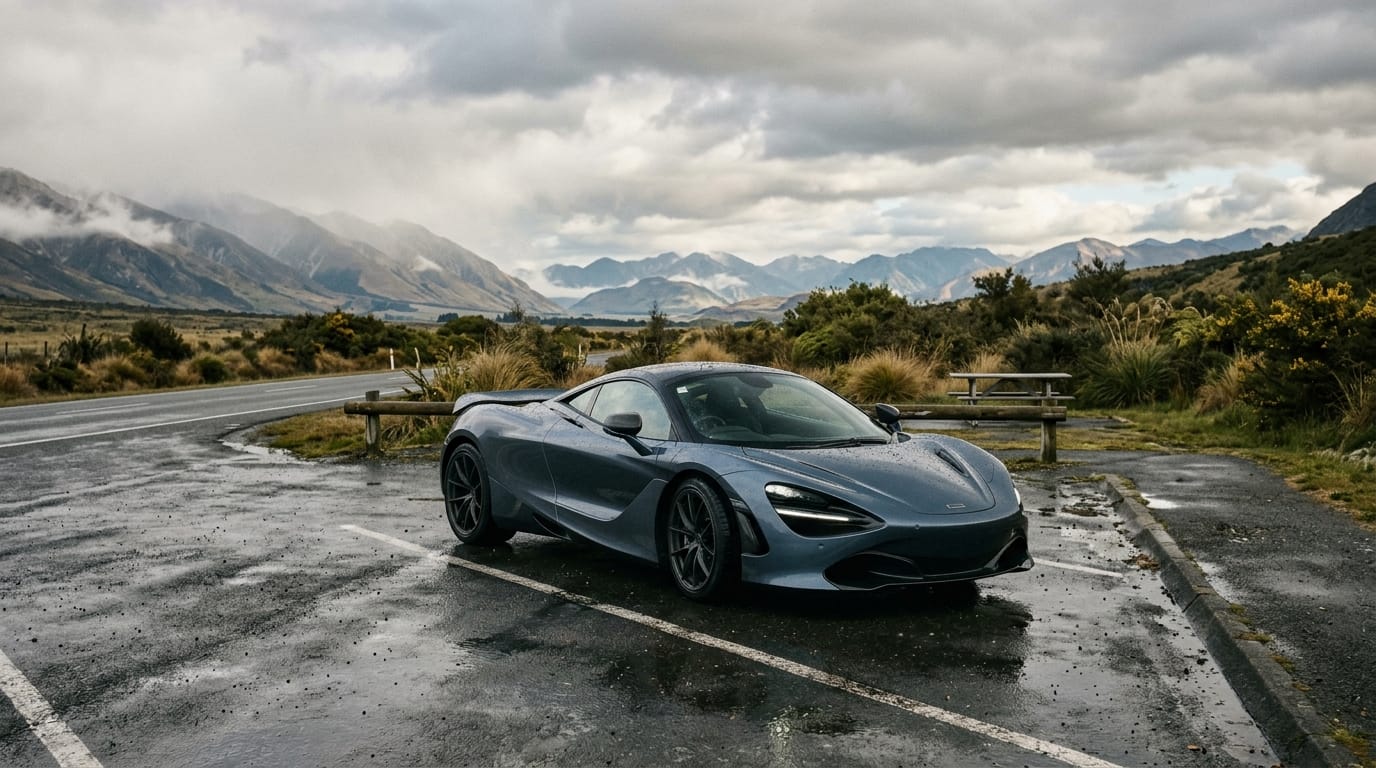
Spring mornings can feel noticeably colder than afternoons. Shaded sections may stay damp long after exposed pavement dries.
Rain can reduce tire grip, while standing water may create a risk of aquaplaning under particular conditions.
Loose gravel and road maintenance material may also appear around rural junctions or repaired sections.
These challenges matter in any vehicle, but powerful sports cars require smooth steering, braking, and acceleration.
Why wet roads demand smoother driving
A tire needs sufficient grip to support cornering, braking, and acceleration.
When water or loose material reduces traction, abrupt inputs can overwhelm the available grip.
Reduce speed to match the conditions, increase following distance, and make changes gradually.
Avoid heavy acceleration while turning and do not rely on electronic stability systems to overcome unsafe speed.
Drivers should also remember that high-performance summer tires may behave differently in colder weather.
Follow the vehicle manufacturer’s temperature and tire recommendations.
Watch for rough roads and low-clearance obstacles
Many supercars sit substantially lower than ordinary family vehicles.
That design can make steep driveways, uneven parking entrances, potholes, and gravel surfaces problematic.
Before beginning the drive, confirm whether the chosen route suits the vehicle.
Check the rental agreement for prohibited surfaces and ask about any nose-lift system.
Never assume the presence of a lift function makes every entrance safe.
Our visitor checklist for Christchurch supercar hire covers additional vehicle handover and route-planning questions.
Check spring forecasts before driving inland
Weather in elevated areas can differ significantly from conditions in Christchurch.
Rain on the plains may coincide with colder conditions around mountain passes.
Strong winds can also influence handling, especially when travelling through exposed sections.
Drivers should review forecasts and road alerts before departure and remain prepared to change plans.
How to prepare for unexpected alpine conditions
NZ Transport Agency Waka Kotahi issued multiple road weather advisories during 2026, including warnings about snow and ice affecting South Island highways.
Those advisories demonstrate why route conditions should never be assumed from the calendar alone.
Before considering an alpine journey, check the current highway status and whether the vehicle is suitable for the route.
Some rental providers may restrict particular roads or travel during winter-like conditions.
Do not enter a route requiring snow chains unless the vehicle, tire setup, agreement, and driver preparation make travel appropriate.
Use the official NZTA Journey Planner for road closures, delays, and conditions.
Allow enough daylight for an unhurried journey
Longer spring days can make sightseeing appealing, but drivers should still plan around realistic travel times.
Include time for vehicle familiarization, refreshments, photographs, and unexpected delays.
Do not schedule a demanding final section after dark if you are unfamiliar with the road.
Nighttime driving can involve reduced visibility, headlight glare, and animals near rural roads.
Choose an earlier return when conditions or confidence justify it.
How to Plan a Comfortable Spring Supercar Experience
A memorable premium drive does not require a complicated itinerary.
In fact, simple plans often make more room for scenery, comfortable breaks, and spontaneous discoveries.
Consider the driver’s experience, the vehicle’s characteristics, and the purpose of the trip before selecting the route.
A relaxing outing and a technical driving experience are not necessarily the same thing.
Match the route to your confidence and the vehicle
Start by deciding what kind of scenery you want to enjoy and how much driving feels comfortable.
Some drivers prefer broad, predictable roads with easy stopping opportunities.
Others may enjoy rolling countryside or coastal views, provided conditions remain suitable.
Choose public roads for lawful travel, not high-speed performance testing.
New Zealand speed limits represent legal maximums in good conditions, rather than targets for every situation.
Prepare a pre-drive checklist for spring

Check the weather and road status. Confirm your driving licence, rental documents, insurance conditions, and emergency contact details.
During handover, ask about tires, warning indicators, drive modes, wipers, headlights, and parking controls.
Inspect the vehicle carefully and record existing damage with the provider.
Bring suitable clothing, drinking water, and a charged phone.
Finally, make sure the route and planned stops suit the vehicle’s clearance and permitted use.
Understand the importance of tire condition
Tires influence braking, steering, and grip on wet pavement.
Check for visible damage and ask the provider whether tire pressure and tread condition meet the relevant requirements.
Do not attempt to adjust specialist tire pressures based on an ordinary passenger-car recommendation.
If a dashboard warning appears, seek guidance before continuing.
A high-performance vehicle can feel reassuring when everything works correctly, but that confidence should not replace responsible driving.
Respect traffic and passing rules
New Zealand drivers keep left and must follow applicable passing and speed rules.
Do not cross the centre line on a blind bend or attempt an unsafe overtake to maintain a timetable.
If traffic forms behind you, use an appropriate safe stopping place when required rather than increasing speed.
Enjoying a luxury vehicle does not grant priority over other road users.
Be particularly considerate of cyclists, farm vehicles, pedestrians, and motorists travelling at different speeds.
Plan suitable photo stops
Spring landscapes provide attractive photographic opportunities.
However, do not stop on narrow shoulders, blind corners, or entrances where the vehicle obstructs traffic.
Choose lawful parking areas with suitable pavement and enough space to open the doors safely.
Never stand in an active traffic lane to photograph a car.
If the location involves private property, ask permission before entering or setting up equipment.
Choose comfort over itinerary pressure
A tightly scheduled route can create unnecessary stress.
Drivers may rush between locations or feel pressured to make up lost time after a stop.
Build generous breaks into the plan and keep the number of destinations manageable.
If the weather changes, shorten the drive or choose a safer alternative.
For more ideas about combining driving with luxury travel, browse our quiet luxury supercar experience guide.
Prepare for strong winds
Wind gusts can surprise drivers in exposed areas.
Keep both hands appropriately positioned on the steering wheel and avoid sudden corrections.
Reduce speed when stability or visibility becomes uncomfortable.
Be cautious around larger vehicles and in locations where terrain changes wind exposure.
If conditions deteriorate significantly, stop in a safe place and reassess the journey.
Do not rely solely on navigation apps
Navigation systems provide useful directions, but a suggested route may not suit every low sports car.
Some apps prioritize shorter travel times without accounting for steep access roads, gravel sections, or rental restrictions.
Review the proposed route before departure and compare it with official road information.
Ask the provider about suitable alternatives when uncertain.
A sensible route should fit both the driver and the vehicle.
Know when to postpone the experience
Severe weather, road closures, vehicle warnings, or unexpected mechanical issues may justify changing plans.
A responsible driver accepts that not every day offers suitable conditions.
Review any booking or cancellation arrangements in advance rather than assuming bad weather automatically entitles you to a refund.
When safety becomes uncertain, seek advice from the provider and relevant road authorities.
Enjoy performance responsibly
A supercar offers distinctive steering, seating, engine character, and design without requiring reckless acceleration.
Allow yourself to enjoy the experience at lawful, appropriate speeds.
Electronic driver assistance can help in certain situations, but it cannot defeat the laws of physics.
Remain alert to weather, other drivers, and the road ahead.
For a broader perspective, explore our Christchurch motorsport-to-road driving guide.
Make spring 2026 a memorable driving season
Canterbury supercar spring driving in 2026 combines beautiful landscapes with the excitement of a premium vehicle.
However, the best experiences begin with preparation rather than speed.
Check the forecast, select appropriate roads, understand the vehicle, and allow time for changing conditions.
A thoughtful itinerary creates space to appreciate the scenery, enjoy the engineering, and return with positive memories.
Safety note: This guide provides general driving education. Always follow New Zealand road rules, current warnings, vehicle instructions, and rental conditions. This website is an educational resource and does not confirm the availability of driving experiences.