
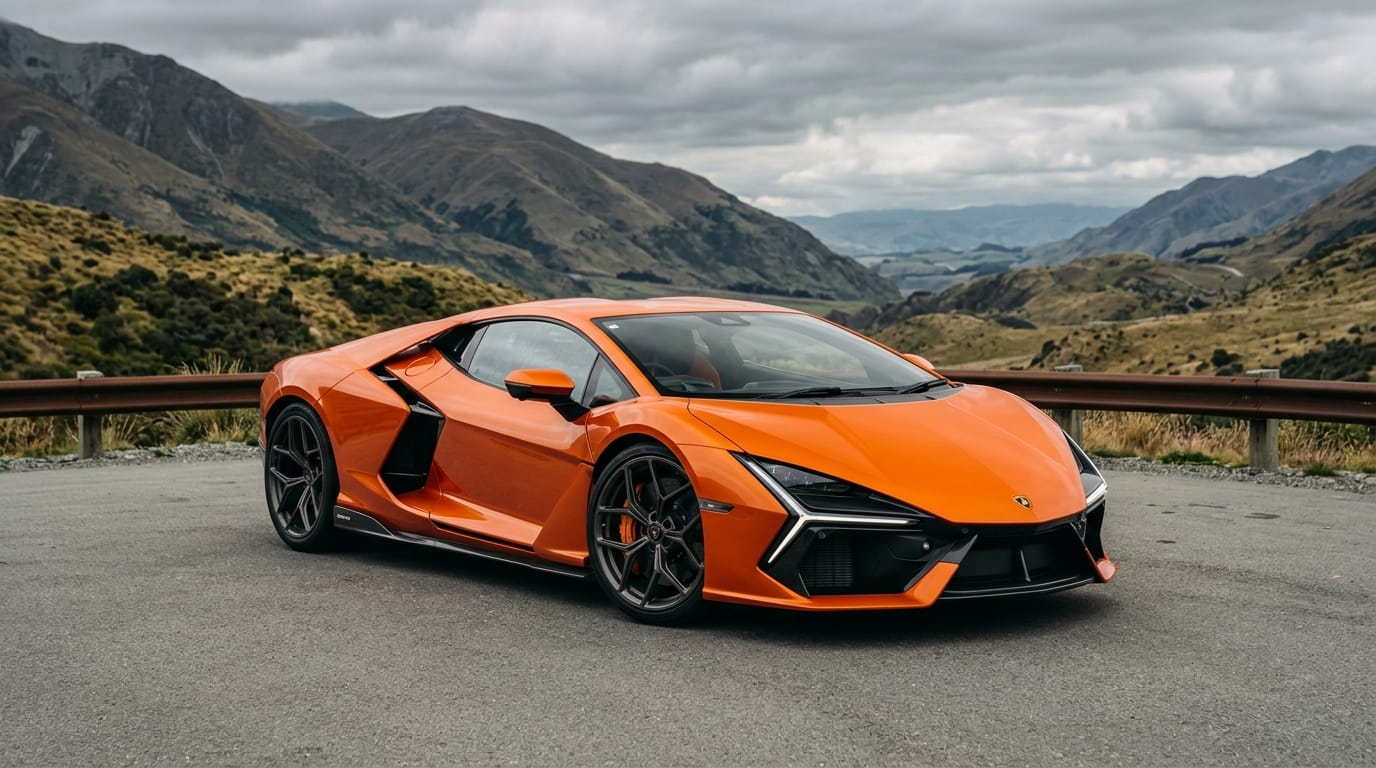
The Lamborghini Temerario 2026 is one of the clearest examples of how supercar engineering is changing. Its twin-turbocharged V8 and three electric motors produce a combined 920 CV, according to Lamborghini. That headline puts it among the most powerful road-focused cars in the brand’s history, yet the bigger story is what the hybrid system changes about response, sound and design.
For Kiwi enthusiasts, the Temerario is particularly interesting because it replaces the familiar naturally aspirated V10 formula associated with the Huracán. Lamborghini has not simply added a battery to an older drivetrain. It has developed a different powertrain concept while trying to preserve the excitement and bold styling for which the brand is known.
This guide examines verified specifications, driving characteristics, potential ownership questions and the relevance of the Temerario to Christchurch’s performance-car audience. It does not assume a specific vehicle is already available for local test drives or rental.
Lamborghini Temerario 2026 Powertrain and Design
Lamborghini’s official Temerario specifications identify a 3,995 cc twin-turbo V8 supported by three electric motors. Combined output reaches 920 CV, equivalent to 677 kW. The manufacturer quotes 0–100 km/h in 2.7 seconds and a maximum speed of 343 km/h under stated testing conditions.
Those are impressive engineering numbers, not public-road targets. In New Zealand, safe driving demands legal speeds, appropriate following distances and steady inputs when roads are wet or unfamiliar. A supercar’s available power increases the importance of judgement rather than reducing it.
Why Lamborghini moved from V10 to hybrid V8
The change matters because enthusiasts often identify Lamborghini models by their engine sound as much as their shape. The Huracán’s naturally aspirated V10 delivered a particular response and soundtrack. The Temerario’s turbochargers and electric motors bring a new combination of torque delivery, energy management and acoustic character.
Lamborghini has emphasised a high-revving V8 design, with the engine engineered for unusually high rotational speeds. That is a deliberate attempt to retain an emotional, mechanical feel even as electrification becomes a central part of the supercar formula. The result cannot be reduced to a simple claim that the new car is automatically better in every situation.
What three electric motors contribute
Electric motors can deliver torque rapidly and help refine how the car responds when a driver requests acceleration. In a complex hybrid supercar, their roles interact with traction control, the combustion engine and other electronic systems. They are not simply three separate engines whose numbers should be added without understanding the manufacturer’s combined-output rating.
For daily driving, the practical question is how naturally the complete system responds to gentle accelerator and brake inputs. For circuit use, its calibration may allow engineers to shape corner exit behaviour and power delivery. The strengths of each mode depend on the specific conditions and professional setup.
Why a 2.7-second sprint is not a road-driving goal
A quoted acceleration test depends on surface, tyres, driver procedure and other controlled variables. Public roads are not controlled environments. Intersections, pedestrians, cyclists and changing visibility make hard launches inappropriate even when the vehicle is technically capable of them.
Enthusiasts can still appreciate the drivetrain by studying its engineering and enjoying smooth, compliant driving where permitted. Our article about the handling differences of supercars explains why power and fast reactions call for extra attention to road conditions and vehicle familiarity.
What the design says about the next Lamborghini era
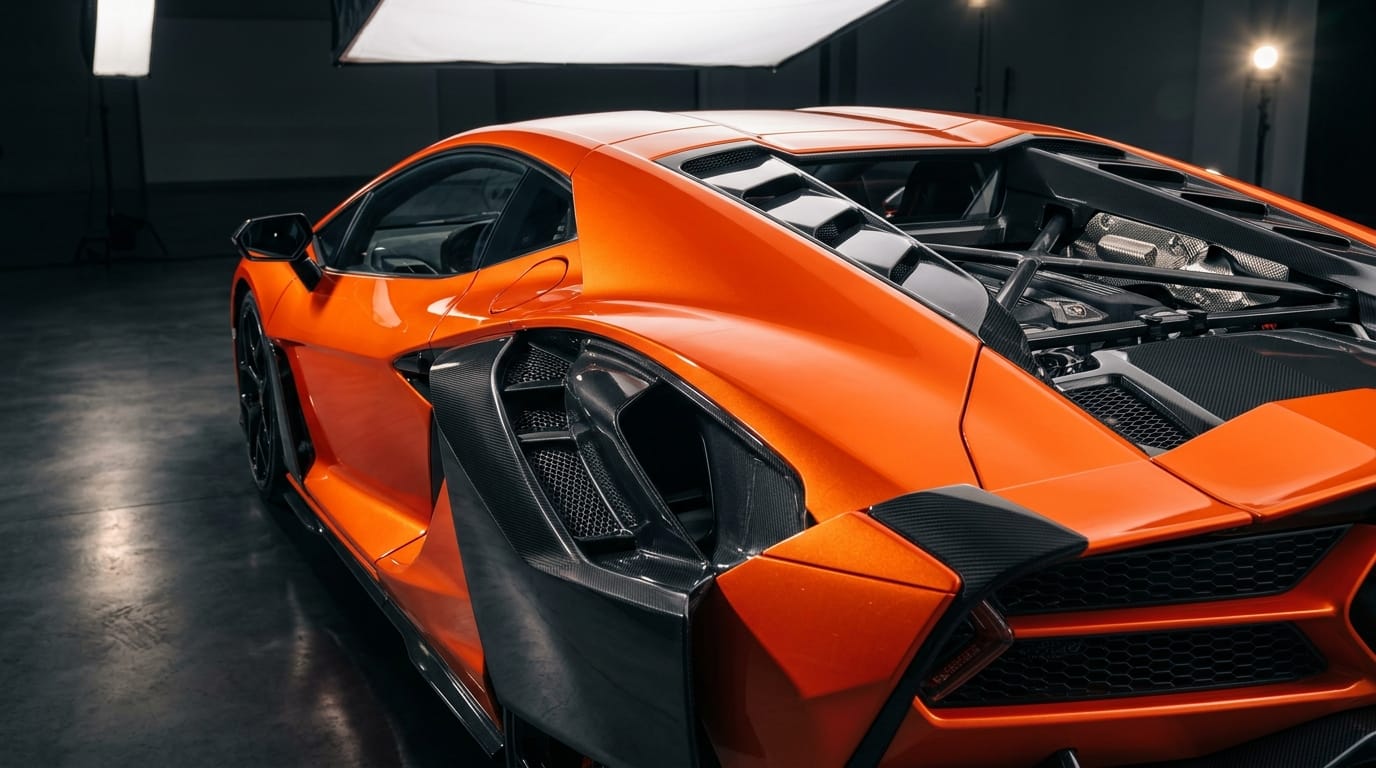
The Temerario is easily recognisable as a Lamborghini, but its lighting signatures, intakes and aerodynamic surfaces establish a distinct identity. Hexagonal daytime running lights connect to the brand’s geometric design language, while the body contains carefully shaped surfaces for airflow, cooling and visual drama.
The Temerario is also part of Lamborghini’s broader electrification strategy. Its hybrid powertrain changes how designers package major components and handle heat. Cooling becomes especially important in a car combining turbochargers, electric hardware and high-performance brakes within a compact silhouette.
How the Alleggerita package changes the focus
Lamborghini describes an optional Alleggerita package intended to reduce mass and increase aerodynamic performance. Its official model information cites a weight reduction of more than 25 kilograms and more focused aerodynamic features. Such equipment can appeal to collectors and drivers interested in occasional track activity, but it does not automatically make the car the best choice for everyday touring.
The practical trade-off includes cost, comfort and the possibility that specialised parts demand more attention. Owners should compare the specific option list rather than treating every Temerario as technically identical. Equipment, tyre specification and regional configuration may vary.
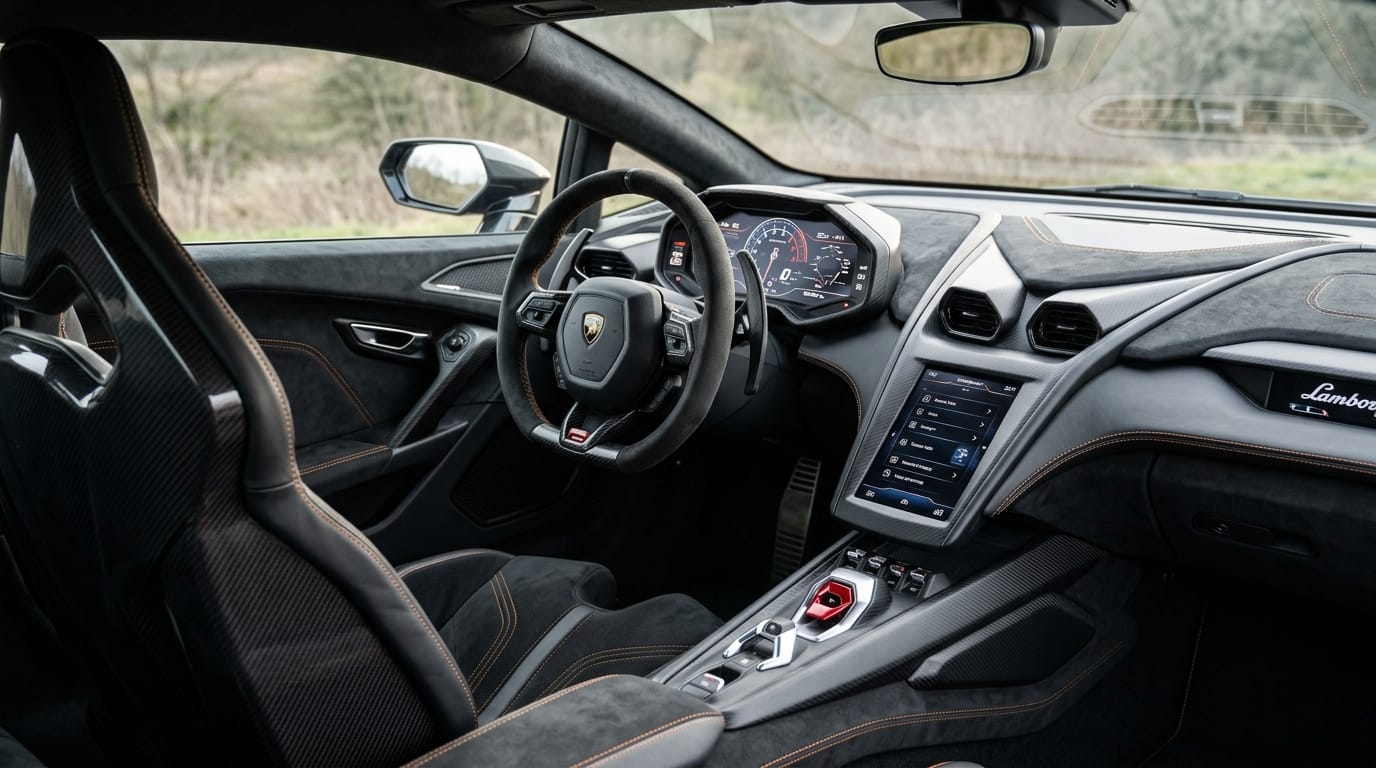
One useful way to evaluate the Temerario is to separate three distinct experiences: seeing it, hearing it and driving it. Photographs communicate the hexagonal lighting and sculpted proportions, while official videos provide clues about the sound character. Neither can fully describe steering, braking or seating comfort. Independent road tests can add perspective, although their conditions may differ from those in New Zealand.
The current wave of electrified exotic cars also creates new questions about what buyers value. For some, collector appeal comes from a recognizable engine layout and a long-standing model lineage. For others, the attraction is integrated software, instant electric assistance and technical novelty. The Temerario sits directly in that conversation because it carries familiar Lamborghini styling into a substantially different powertrain era.
Buying decisions should distinguish confirmed regional specifications from international publicity. Fuel economy figures can be reported under different testing procedures, so numbers from one market may not transfer neatly to another. Wheel and tyre combinations, optional lightweight equipment and locally supplied features can also change the configuration. Always request the exact New Zealand vehicle specification before comparing running costs or making conclusions about suitability.
What Kiwi Buyers and Christchurch Enthusiasts Should Know
The Lamborghini Temerario 2026 is relevant to New Zealand’s high-performance market, but local price and availability should be checked directly with an authorised dealer. Public model listings may show price on application rather than a fixed retail number. Imported options, taxes and personalisation can change the final total.
There is an additional distinction between a car being offered in New Zealand and a car being readily available to rent in Christchurch. A model announcement does not establish local hire inventory. Readers should avoid assuming that every new supercar discussed online can be booked for a weekend experience.
What hybrid technology changes for drivers
In high-performance applications, electrification changes throttle feel, energy recovery, weight distribution and how computers coordinate vehicle systems. The technology creates opportunities, but it can also introduce complexity for long-term maintenance and specialist servicing. A prospective buyer should ask about authorised service support, warranty details, battery-related coverage and relevant ownership costs.
Some enthusiasts remain attached to the simplicity and sound of older naturally aspirated engines. Others value the newer response and engineering possibilities. Neither preference is inherently wrong. It is helpful to compare the desired driving experience rather than assume that a faster published acceleration time settles the discussion.
How to plan a respectful Canterbury supercar experience
A Canterbury route should suit the car’s width, ground clearance and tyre requirements. Check the condition of the road, traffic forecasts and lawful parking options before departing. Overseas visitors should also review the NZ Transport Agency’s driving guidance before a self-drive booking. Low supercars can be vulnerable to steep ramps, gravel and poorly maintained entrances, even during an otherwise relaxed trip.
For those renting a different performance vehicle, confirm licences, insurance excess, deposits and allowed routes before booking. Our Christchurch supercar hire visitor checklist outlines useful questions, while the driving etiquette guide explains how to enjoy attention without creating risk or disruption.
The Lamborghini Temerario 2026 also fits into a wider industry conversation about the future of emotional driving. Hybrid systems allow extraordinary performance while challenging manufacturers to protect the qualities enthusiasts associate with their brands. The solution involves more than speed: design, controls, comfort and the way the vehicle feels at normal speeds all matter.
For readers who want to compare how New Zealand’s performance culture is evolving, our motorsport-to-road feature offers broader context. The key lesson remains practical. Appreciate Lamborghini’s engineering, verify local facts before making a booking or purchase decision, and keep performance driving on public roads safe and legal.