
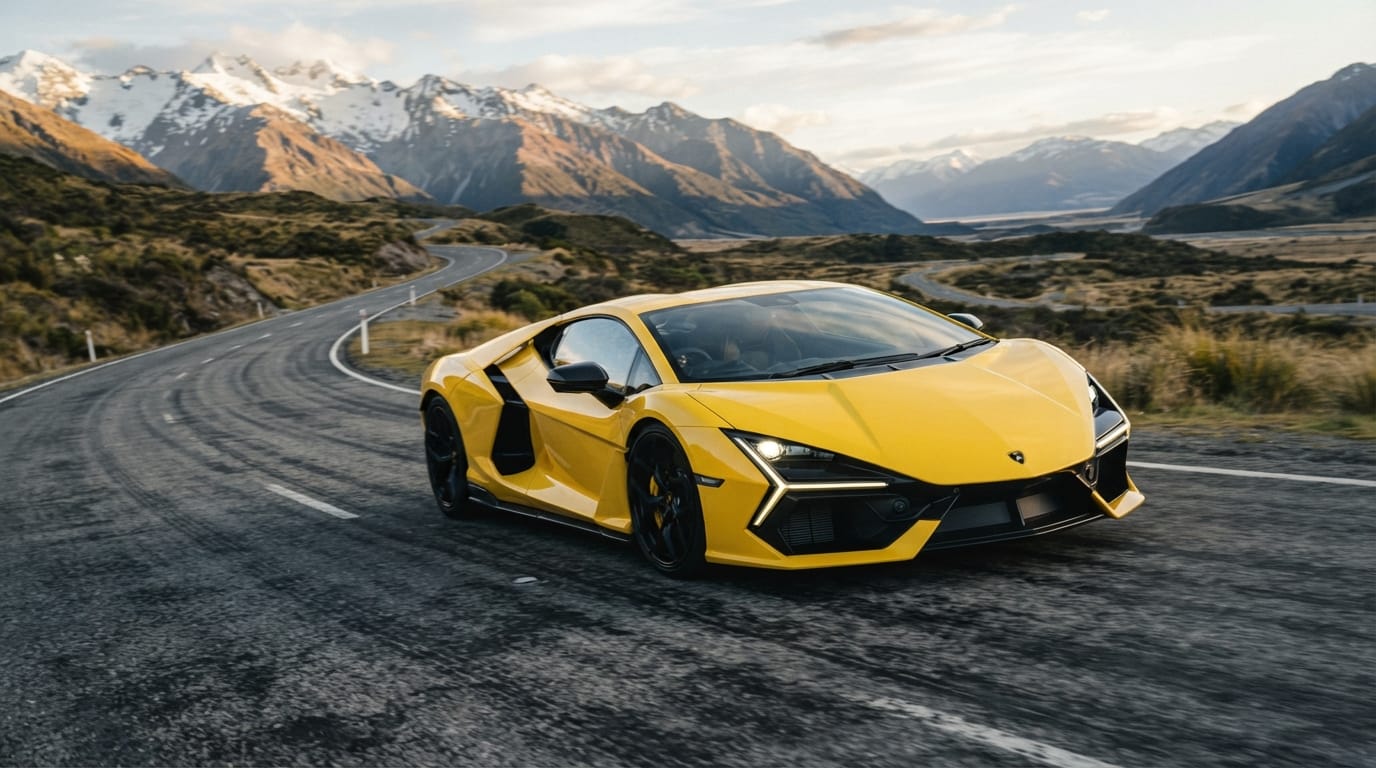
Lamborghini has taken one of its most famous performance badges into the hybrid era. In August 2026, the company revealed the Revuelto SV, a more extreme version of its V12 hybrid flagship and the latest member of the Super Veloce lineage.
The letters “SV” have long carried special meaning for Lamborghini enthusiasts. They stand for Super Veloce, or “super fast,” and traditionally identify a lighter, sharper, more focused version of an already dramatic car. The new Revuelto SV continues that idea while adding something previous generations never had: a hybrid powertrain combining a naturally aspirated V12 with electric assistance.
Lamborghini is limiting production to 1,963 examples, a number chosen to honour the year the company was founded. Before its public debut, the car also set a 1:41.6 production-car lap record at the Hockenheimring with Lamborghini factory driver Marco Mapelli. Those details immediately pushed the Revuelto SV into the centre of the 2026 supercar conversation. See Lamborghini’s official Revuelto SV announcement for the manufacturer’s launch details.
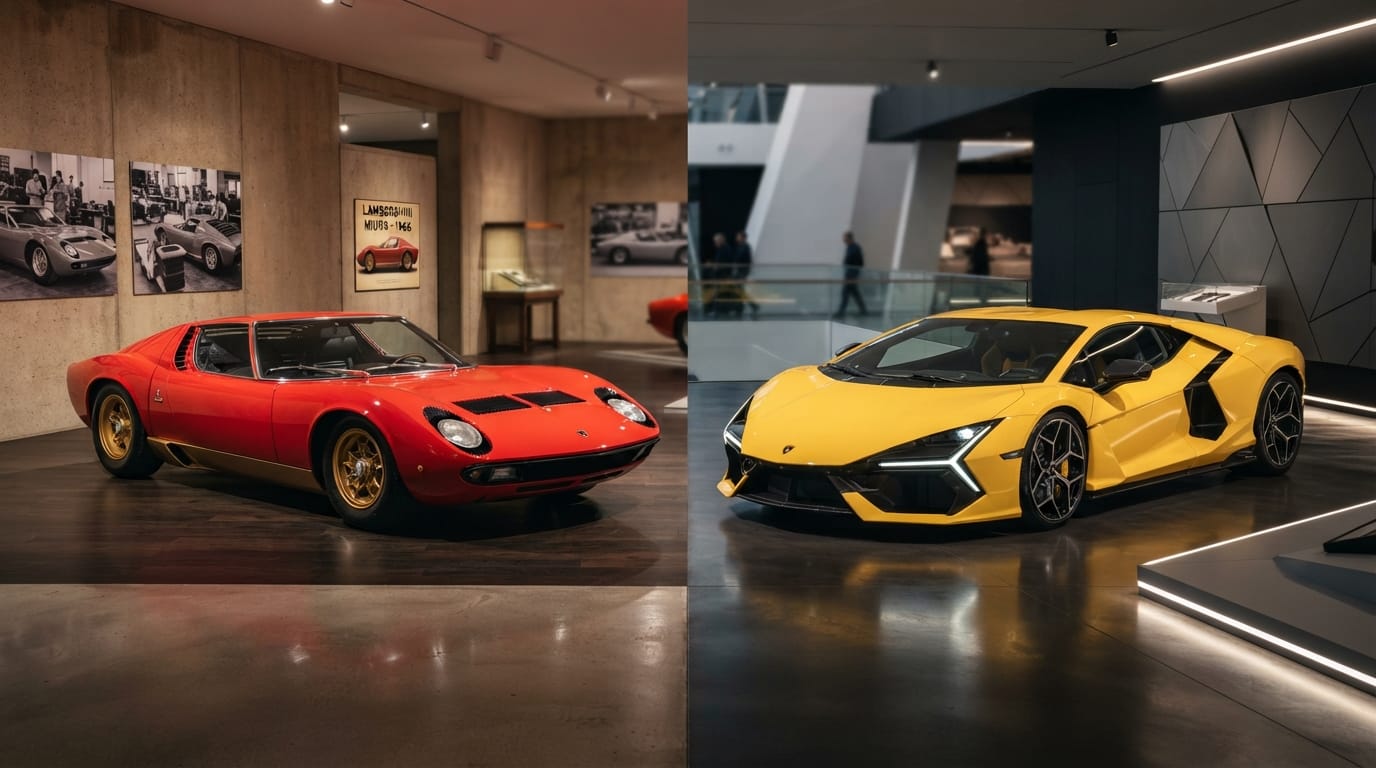
For Christchurch enthusiasts, the car is interesting for another reason. It shows how dramatically the meaning of a supercar is changing. Our earlier look at the Lamborghini Miura at 60 explored the machine that helped define the original mid-engine supercar formula. The Revuelto SV shows how far that formula has evolved.
Why the Super Veloce Formula Still Matters in the Hybrid Era
Lamborghini does not use the SV badge on every model. Historically, it has appeared on cars intended to push an existing platform toward a more focused level of performance. That normally means more power, less weight, stronger aerodynamics, and chassis tuning aimed at sharper response.
The Revuelto SV follows that same philosophy. Lamborghini describes it as combining increased performance with lightweight construction, optimized aerodynamics, and a more precise chassis setup. What makes the 2026 version different is the way those traditional SV priorities are being applied to an electrified flagship.
That matters because hybrid systems can add complexity and mass. Engineers gain the benefits of electric torque, energy recovery, and faster response, but they also have to manage batteries, motors, cooling, and control systems. An SV model therefore has to do more than simply add power. It must make the entire package feel more focused.
A V12 Hybrid Shows That Electrification Can Still Be Theatrical
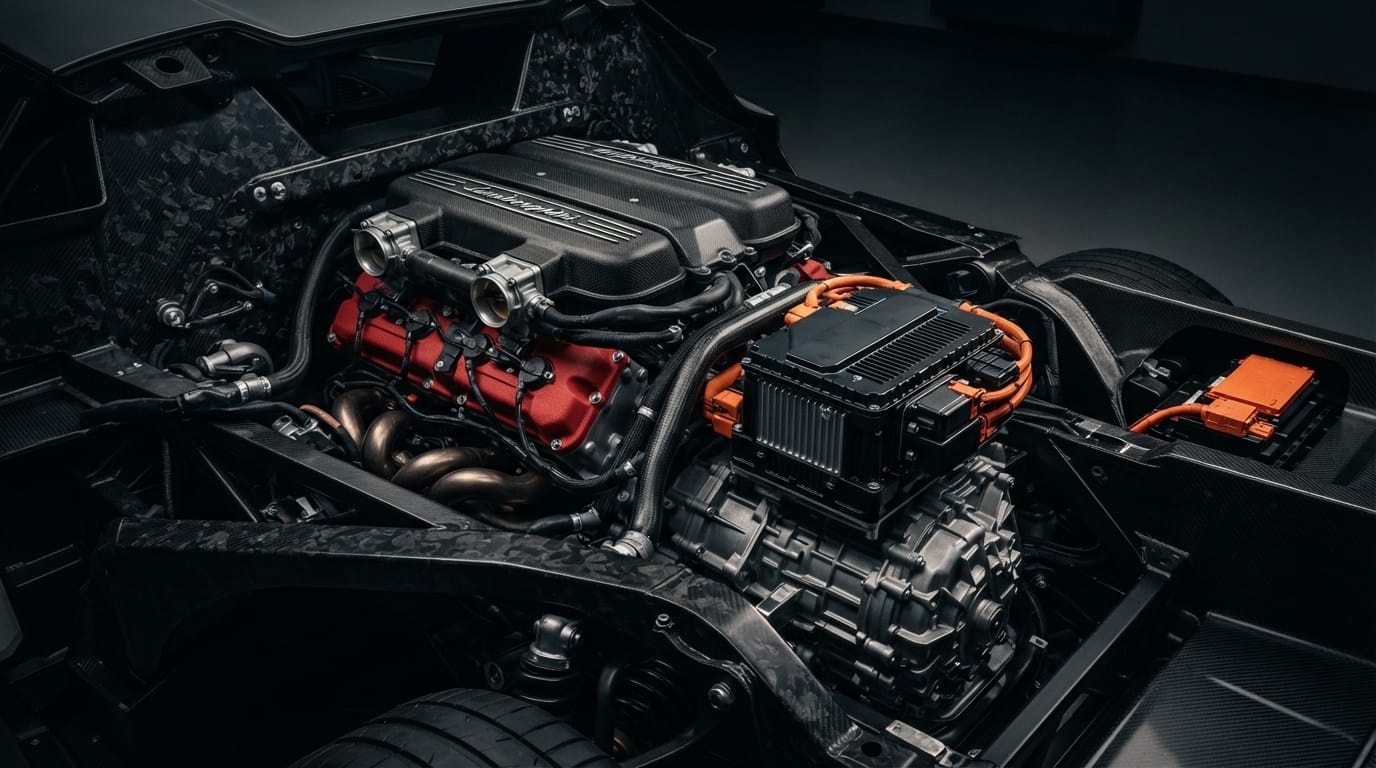
The Revuelto family is built around a naturally aspirated V12 supported by electric motors. That combination allows Lamborghini to preserve one of the most emotional parts of its identity while also using electrification to improve performance and responsiveness.
For enthusiasts worried that the hybrid era would make every supercar feel the same, this is important. Lamborghini is not treating electric assistance as a replacement for theatre. It is using it as another performance tool alongside engine sound, design, aerodynamics, and chassis tuning.
This approach connects closely with the broader changes covered in our guide to hybrid supercars in New Zealand. Ferrari, McLaren, Porsche, and Lamborghini are all proving that electrification can take different forms. The technology does not automatically dictate the personality of the car.
Only 1,963 Examples Make the Revuelto SV a Collector-Focused Flagship
Lamborghini says the Revuelto SV will be produced in a limited run of 1,963 cars. The number is a direct reference to 1963, the year Automobili Lamborghini was founded.
Limiting production adds another layer of appeal for collectors. A standard flagship already sits near the top of the brand’s range, but an SV carries a stronger sense of occasion because it represents a more focused interpretation of the same platform. Rarity also helps preserve the idea that the model is a milestone rather than a routine trim level.
A 1:41.6 Hockenheim Lap Shows the SV Is More Than a Styling Exercise
Before the official world premiere, Lamborghini took the Revuelto SV to Germany’s Hockenheimring. Factory driver Marco Mapelli recorded a 1:41.6 lap, which Lamborghini announced as a production-car record for the circuit.
Lap records need context because conditions, tyres, drivers, and testing methods can differ. However, the result still shows what Lamborghini wanted to prove: the SV upgrades are intended to deliver measurable performance, not simply visual changes or a more expensive specification.
The result also reinforces the importance of chassis balance. On a technical circuit, outright horsepower is only one part of the equation. Braking, traction, aerodynamic stability, weight management, and the way the car changes direction all influence the final lap time.
How the SV Lineage Connects the Miura to the Revuelto
The first famous use of the Super Veloce idea came from the Miura SV. That car belongs to a completely different technological era, yet the basic philosophy remains recognizable. Take an already exotic Lamborghini and make it more focused, more desirable, and more memorable.
Over time, the SV badge became associated with some of Lamborghini’s most dramatic V12 models. Each generation reflected the technology available at the time. The modern Revuelto SV therefore does not need to imitate the Miura. Its job is to express the same idea using 2026 engineering.
That means hybrid assistance, advanced aerodynamics, modern electronics, and sophisticated chassis systems now sit beside the traditional Lamborghini ingredients of a V12 engine, outrageous proportions, and a strong sense of theatre.
Emotional Design Still Matters Even When the Technology Changes
Performance statistics can become outdated quickly. A new car eventually appears with more power, a faster acceleration time, or a better lap. Design and emotion can last much longer.
The Miura remains important six decades later because it made people feel something before the engine even started. Lamborghini understands that lesson. The Revuelto SV is not trying to look restrained. It is intended to feel like an event, and that emotional quality is one reason the SV badge still carries weight.
For anyone planning a first exotic-car experience, that is worth remembering. The most memorable car is not always the one with the highest figure on the specification sheet. It is often the one that creates the strongest combination of sound, steering, seating position, design, and sense of occasion.
What the Revuelto SV Means for Christchurch Supercar Fans
The Revuelto SV is unlikely to become an everyday sight on Christchurch streets, and that is part of its appeal. However, the ideas behind it are already influencing the broader performance-car market. Hybrid assistance, active aerodynamics, advanced stability systems, and smarter chassis control are moving from experimental technologies into production supercars.
That means future performance experiences will be defined by more than raw engine output. Cars are becoming better at deploying power, managing grip, responding to driver inputs, and adapting to different conditions.
For New Zealand driving, that matters. Canterbury routes can combine open scenery, changing road surfaces, tight corners, coastal sections, elevation changes, and unpredictable weather. A car that communicates clearly and manages its performance well can be more rewarding than one that simply produces the biggest horsepower figure.
Modern Supercar Performance Is Moving Beyond Horsepower
The Revuelto SV illustrates a larger 2026 trend: manufacturers are now chasing total performance. Power still matters, but so do weight, aerodynamic efficiency, electric response, braking, software, suspension, and driver confidence.
That is why two cars with similar acceleration can feel completely different. One may feel calm and secure, while another feels raw and demanding. One may use hybrid torque to fill gaps in engine response, while another relies on a turbocharged engine or all-wheel-drive traction.
Our guide to why supercars handle differently from everyday cars explains why these differences become obvious behind the wheel. Modern supercars operate with far higher limits, so smooth steering, progressive throttle use, and good road awareness matter even when electronic systems are helping.
Canterbury Roads Show Why Balance Matters More Than Bragging Rights
No responsible public-road drive should attempt to reproduce a Hockenheim lap record. The value of a supercar on Christchurch and Canterbury roads is not the opportunity to explore maximum speed. It is the chance to feel precision at legal speeds: the immediate throttle response, the quality of the brakes, the steering feedback, and the way the chassis settles through a flowing corner.
That is why cars such as the Revuelto SV remain fascinating even to people who may never own one. They push technology forward, create new benchmarks, and influence the expectations drivers have for future performance cars.
The Lamborghini Revuelto SV captures the strange and exciting place the supercar world has reached in 2026. It uses a V12 that connects directly with Lamborghini tradition, electric assistance that points toward the future, and an SV badge that has represented focused performance for more than half a century.
For Christchurch supercar fans, the lesson is simple. The industry may be changing quickly, but emotion has not disappeared. The engines, motors, software, and aerodynamic systems are becoming more complex, yet the goal is still familiar: create a machine that makes the driver remember the road long after the journey ends.